
Last updated October 30, 2026
 Home additions & ADU
 Kitchen remodeling
 Bathroom remodeling
 Roofing
 Windows & doors
 Driveway & pavers
 Fence
Free written scope consultation - allowances, timeline, and change-order rules on paper before a single trade is scheduled
DIY vs Professional Construction: The San Bruno Homeowner’s Decision Guide
In California, you can legally pull an owner-builder permit to remodel your own home. What most San Bruno homeowners don’t realize until it’s far too late: that decision makes you fully liable for code compliance, and it triggers a mandatory disclosure to any buyer within five years of the work. If the next buyer’s home inspector finds unpermitted wiring behind your walls, the deal can fall apart over something you saved $4,000 on. This guide walks through the real trade-offs between doing it yourself and hiring a licensed contractor in San Bruno, with specific attention to the things that matter here: peninsula building codes, seismic standards, fog-zone moisture issues, and the resale consequences of unpermitted work. For How to Hire a Construction Contractor in San Bruno: A Step-by-Step Guide, see our dedicated resource.
Styles & brands we work with
Quick Answer
DIY makes sense for San Bruno homeowners only when a project requires no permit, no licensed inspection, and a failure won’t cause structural damage, injury, or insurance problems. That’s roughly 15% of typical home improvement work. For anything involving structural changes, electrical, plumbing, roofing, or windows and doors, hiring a licensed contractor is not about convenience, it’s about liability protection, warranty coverage, and preserving the resale value of your home.
Table of Contents
- The Owner-Builder Permit: What California Actually Allows
- Where DIY Genuinely Makes Sense in San Bruno
- Where DIY Goes Wrong: The Five Projects We’d Never Suggest
- How DIY on One Phase Can Void a Contractor’s Warranty on Adjacent Work
- The Hidden Time Cost of DIY in a Bay Area Construction Market
- A Three-Question Decision Framework for Every Project
- Permits and Inspections in San Bruno: What Gets Checked
- Common Mistakes to Avoid
- When to Call a Professional
- Frequently Asked Questions
- The Bottom Line
- Author
The Owner-Builder Permit: What California Actually Allows
Here’s the part almost every DIY guide skips. Under California law, a homeowner can act as their own general contractor and pull an owner-builder permit for work on their primary residence. It sounds like a loophole built for budget-conscious remodelers. It’s not.
When you sign an owner-builder permit in San Bruno, you are certifying under penalty of perjury that you are performing the work yourself or directly supervising employees on your own payroll. You cannot use an owner-builder permit to hire unlicensed subcontractors and act as a de facto general contractor. If you do, you’re violating state contractor licensing law. The Contractors State License Board has pursued cases against homeowners who used owner-builder permits as a shell to run an illegal building operation.
The second consequence is disclosure. If you sell your home within five years of completing owner-builder work, California’s real estate transfer disclosure statement requires you to tell the buyer that unlicensed work was performed under an owner-builder permit. That single disclosure changes the negotiation. Buyers get nervous. Lenders sometimes hesitate. Insurance underwriters ask questions. The savings from that owner-builder bathroom remodel can evaporate at closing when the buyer demands a price reduction to compensate for uncertain workmanship.
The third consequence is liability. When a licensed contractor does the work and pulls the permit, their insurance covers defects. When you pull an owner-builder permit, you carry that risk personally. If a future homeowner discovers that your hand-laid tile concealed a slow leak that rotted a floor system for two years, their insurance company can pursue you. Homeowner’s insurance generally doesn’t cover unpermitted work performed by the owner, even if it passed inspection at the time.
Our team at San Bruno Construction home has walked into enough retrofits where owner-builder work from a prior owner needed correction that we treat any owner-builder remodel as a liability investigation until proven otherwise. That’s not judgement, it’s pattern recognition.
Where DIY Genuinely Makes Sense in San Bruno
There’s a real category of work where doing it yourself is not just acceptable but wise. These are projects with low consequence of failure, no permit requirement, and a material cost that doesn’t justify a contractor’s minimum job fee. In San Bruno, with its mild coastal climate and well-maintained housing stock of mostly 1940s through 1970s homes, the following projects tend to fall into this category.
Interior Painting and Surface Prep
Painting interior walls, ceilings, and trim is the classic DIY win. Materials run $50 to $80 per gallon for quality paint, and the labor savings can be significant. No permit is required. The risk of failure is cosmetic and fixable. In San Bruno’s climate, you won’t deal with extreme temperature swings affecting curing times, though coastal fog in neighborhoods like Crestmoor and Rollingwood means you should give walls extra drying time before taping or applying second coats.
Finish Carpentry: Baseboards, Crown Molding, Casing
Finish carpentry, meaning trim work, is genuinely DIY-able for a patient homeowner. The tools are simple: a miter saw, a coping saw, a nail gun or hammer, and caulk. The materials are inexpensive. The worst outcome is an ugly miter joint that you can re-cut. No inspection will ever check your baseboard reveals. In our experience, a San Bruno homeowner who takes time to watch two or three good trim tutorials can produce results that look professional on their second room, after the first room teaches them what not to do.
Basic Landscaping and Drought-Tolerant Planting
Converting a lawn to drip irrigation and drought-tolerant landscaping is manual labor and planning, not specialized trade work. San Bruno’s water district offers rebates for lawn conversion, and the planting work itself requires no license or permit. Digging, laying drip line, and planting native species like ceanothus, manzanita, and California fescue are straightforward. The failure consequence is a dead plant, not a structural failure.
Cabinet Hardware and Fixture Face-Upgrades
Swapping cabinet pulls, hinges, faucet handles, and light switch plates is entirely DIY. No permits, no inspections, no liability. Brands like Moen make faucet replacement parts and complete trim kits that install with simple hand tools. We regularly tell San Bruno homeowners that if they can operate a screwdriver and follow a parts diagram, they can replace cabinet hardware across a kitchen in an afternoon and meaningfully change the room’s look.
Cosmetic Caulking and Weatherstripping
Replacing failed caulk around tubs, sinks, and windowsills and installing new weatherstripping on doors falls into the low-risk DIY bucket. A fog season in San Bruno will expose failing caulk fast, and these are simple, repeatable fixes with cheap materials and zero permit obligations.
What all these projects share: you can’t kill anyone if you get it wrong, you won’t need a permit, and the financial downside of a botched job is measured in hundreds, not tens of thousands. Those three tests matter more than your personal skill confidence.
Where DIY Goes Wrong: The Five Projects We’d Never Suggest
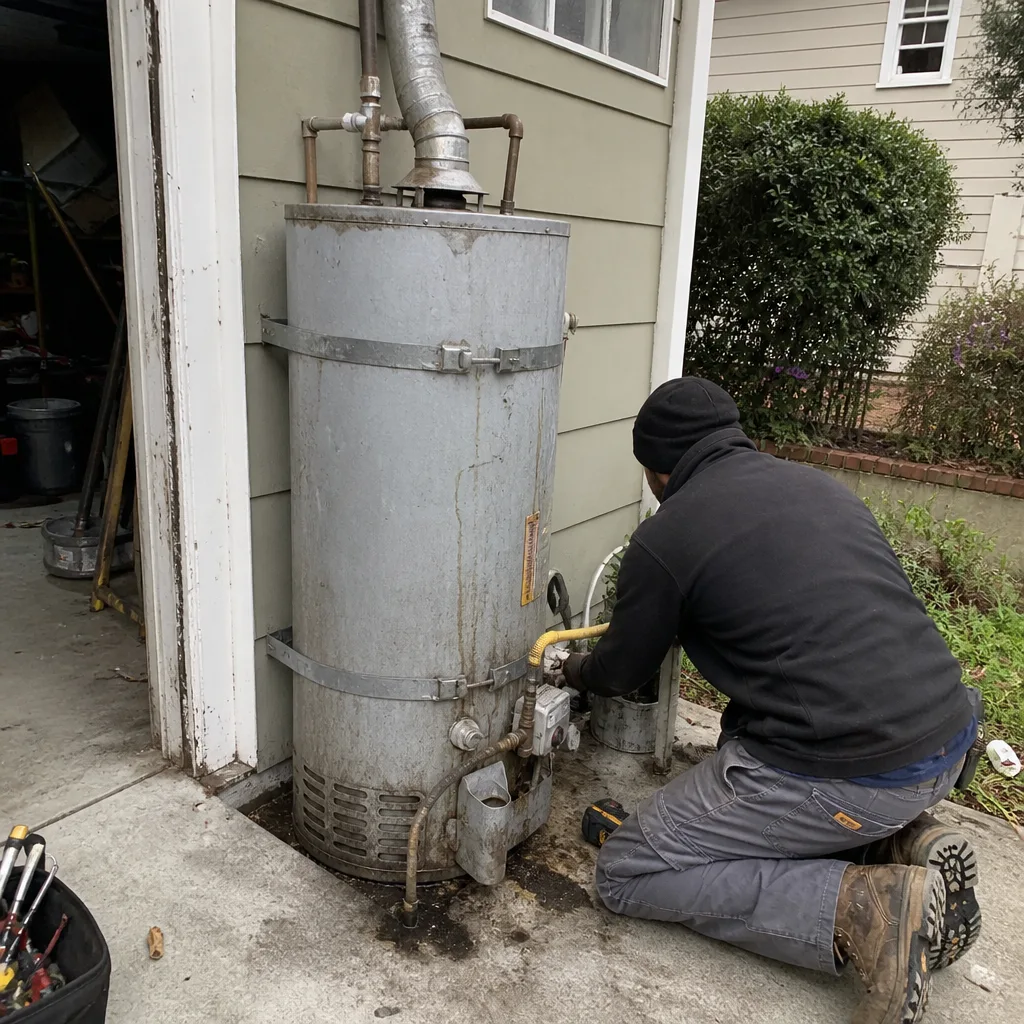
Every contractor has a file of horror stories. Ours includes the San Bruno homeowner who replaced their own water heater without understanding earthquake strapping requirements, the Crestmoor resident who installed a window without flashing and invited two years of wall rot, and the homeowner who replaced an electrical outlet without checking for aluminum wiring, then watched it arc and melt. Here are the five categories where we strongly recommend against DIY, regardless of skill.
1. Structural Changes: Removing Walls, Adding Openings, Altering Framing
San Bruno sits in a high seismic zone. The San Andreas Fault runs less than 5 miles offshore. Every structural change to a home here requires an engineered plan, a permit from the City of San Bruno Building Division, and an inspection of the completed framing. That’s not bureaucracy. That’s the enforcement of basic physics. A load-bearing wall removed incorrectly doesn’t sag visibly and give you a warning, it loads floor joists and headers they weren’t designed to carry. Failure can be sudden and catastrophic in an earthquake. If you’re considering opening the wall between a kitchen and living room, hire a structural engineer and a licensed general contractor. The permit is not optional, and the inspection is not a formality.
2. Electrical Panel Work and Circuit Modifications
Electrical work in San Bruno requires a permit and a licensed electrician. The practical reasons go beyond code. Homes built in the 1950s and 1960s in neighborhoods like Lomita Park and Westborough commonly have original electrical panels that are now considered undersized or unsafe. Some have aluminum branch wiring, which requires special connectors and anti-oxidant paste. A homeowner replacing a receptacle may not realize the wires behind it are aluminum, and a failed aluminum-copper connection generates heat and can arc. Electrical failures are a leading cause of house fires. If you touch anything behind the drywall beyond swapping a like-for-like light fixture, you’re in licensed contractor territory. And honestly, even a light fixture swap in an old San Bruno home is worth letting a pro check the wiring condition.
3. Roofing and Roof Repairs
San Bruno gets real rain, and coastal fog creates persistent moisture exposure that accelerates the failure of marginal roofing. A DIY patch job on a composition shingle roof can void the warranty on the surrounding shingles, and improperly installed flashing channels water into wall cavities where it rots framing invisibly. Fall and roof safety is also genuinely dangerous, and steep ranch and split-level rooflines common in San Bruno’s hillside streets make falls a real risk. Roofing is not a trade to learn on your primary asset.
4. Windows and Exterior Doors
Window installation looks simple, and that’s the trap. The actual glass unit isn’t the hard part; the flashing, waterproofing, and drainage plane integration are. A window installed without a sloped sill pan or proper head flashing leaks slowly, and by the time you see the stain on the interior wall, the framing has been rotting for a year. Exterior doors have the same issue, plus security and thermal performance considerations. San Bruno’s fog-driven humidity makes properly flashed openings essential, not optional. A window job done wrong can cause $10,000 in framing repair behind a $400 window.
5. Plumbing Beyond Fixture Swaps
Replacing a faucet is DIY-able. Moving a drain line, replacing a water heater, relocating a toilet, or modifying supply pipes is not. Water damage is a slow, expensive failure. A poorly soldered joint behind a wall can leak for weeks before revealing itself through a buckled floor or a mold bloom. San Bruno’s older housing stock means cast iron drain pipes and galvanized supply lines are common, and those materials require specific handling and often full replacement rather than patchwork. A water heater replacement must meet California seismic strapping requirements and often requires a permit and inspection. Ignore that, and a future buyer’s home inspector will flag it, and you’ll pay for it at closing.
The through line across all five: the cost of failure is high, the failure is often invisible until significant damage accumulates, and the permit and inspection requirements exist because life safety is at stake. These are not the places to test your DIY confidence.
How DIY on One Phase Can Void a Contractor’s Warranty on Adjacent Work
Here’s a coordination problem most homeowners never consider until a dispute arises. You hire a professional for the heavy work, structural changes, waterproofing, tile installation, then do the “easy” finish work yourself. Sounds like a smart division of labor. But what happens when the finished bathroom leaks and the contractor says the leak started at a seam your caulk job missed, and you say the contractor’s tile substrate failed?
Every legitimate contractor writes warranties that cover their workmanship. But warranties assume that the work was left as the contractor completed it. When a homeowner then modifies or finishes adjacent areas, the contractor can reasonably argue that the failure occurred in the area the homeowner touched, not in the original work. It creates a blame dispute that’s hard to resolve and often ends with the homeowner paying for repairs out of pocket.
This happens routinely in San Bruno remodels where a homeowner does their own painting, trim, and caulking around a professionally installed tub surround. The tub surround leaks at the corner where the homeowner applied a caulk bead. The contractor’s tile work was sound. The caulk joint was the weak point. But the homeowner has no warranty on their own caulking, and the contractor’s warranty doesn’t cover the homeowner’s work. The gray area costs money.
The practical resolution is to define exactly who does what before work begins, and to insist that whoever touches the final waterproofing and finish joints owns the warranty for the integrated system. If you want the savings of doing trim and paint yourself, agree in writing that any leaks or failures in the transition zones will be jointly evaluated, with the understanding that your work may invalidate parts of the professional warranty. Contractors who manage full-scope remodels, including home remodeling, can avoid these gray zones by carrying responsibility across all phases.
The Hidden Time Cost of DIY in a Bay Area Construction Market
Every DIY cost analysis starts with a spreadsheet: materials, tools, a YouTube tutorial, a weekend or two. What that spreadsheet never includes is the coordination cost that’s specific to the Bay Area construction market in 2026.
Material lead times are still unpredictable. Certain imported tile lines, engineered hardwood, and custom-ordered plumbing fixtures can run 6 to 16 weeks from order to delivery. Window and door orders from manufacturers can run 8 to 20 weeks depending on the product line. If you’re doing a phased remodel, where you do some work yourself and hire out other parts, those lead times must be synchronized with the availability of subcontractors, who are booking 4 to 8 weeks out in San Bruno and across the Peninsula.
Here’s what that looks like in practice. You decide to act as your own project manager and pull an owner-builder permit for a bathroom remodel. You order the vanity yourself, schedule a plumber for rough-in, order tile, and hire a tile setter. The vanity arrives 3 weeks late. The plumber can’t reschedule for 5 weeks. The tile setter charges a trip fee when the substrate isn’t ready. Your project that should take 6 weeks stretches to 14. Meanwhile, a general contractor running a full-scope project—see our General Contractor Maintenance Checklist for San Bruno Homeowners for what that entails—has vetted subs who coordinate around material delays because their livelihood depends on the relationship. The contractor absorbs scheduling friction; the DIY homeowner absorbs it alone.
If you enjoy project management and have flexibility in your schedule, that time cost may be acceptable. Most San Bruno homeowners working full-time jobs in San Francisco or Silicon Valley don’t have that flexibility. Time spent chasing a plumber’s schedule is time not spent at work or with family. The question isn’t just “can I do this?” but “do I want to spend my evenings and weekends managing this?”
A Three-Question Decision Framework for Every Project
Most guides tell you to evaluate DIY decisions based on your skill level. Here’s why that’s backwards: skill is the least important variable. Skill can be learned. Liability cannot be un-accepted. The correct framework evaluates three questions in order, and only the third has anything to do with whether you’re handy.
- Does this project require a permit in San Bruno? If the answer is yes, you’re now deciding between pulling an owner-builder permit and accepting personal liability, or hiring a licensed contractor. This isn’t a cost question, it’s a risk question. Permitted work in San Bruno typically includes any structural modification, electrical work beyond fixture replacement, plumbing beyond fixture replacement, window and door replacement, roofing, water heater replacement, and any new construction. Check with the City of San Bruno Building Division before starting any project you’re unsure about.
- Does this project require an inspection? Some work requires an inspection as part of the permit process. Inspections are not pass-fail obstacles, they’re verification that work meets current California Building Code. If you can’t confidently demonstrate compliance to an inspector who has seen thousands of installations, you may fail the inspection and need to pay for corrections. Licensed contractors know what inspectors in San Bruno look for because they sit through those inspections regularly.
- What is the consequence of failure? This is the question that separates painting from plumbing. If you fail at painting, you repaint. If you fail at a shower pan liner, water rots framing invisibly for years and the repair costs five times the original project. If you fail at an electrical connection, the consequence can be a house fire. If you fail at structural framing, the consequence can be a collapse in an earthquake. Consequence of failure, not skill confidence, should drive the decision.
Run every project through those three questions in order. Most people who come to us after a DIY project went sideways skipped question one or question three. They assumed the permit wasn’t required when it was, or they assumed the consequence of failure was minor when it wasn’t.
Permits and Inspections in San Bruno: What Gets Checked
San Bruno operates its own Building Division, separate from San Mateo County’s. That means local inspectors review the work, and they know the housing stock patterns in this city. Homes in San Bruno’s flatland neighborhoods like Huntington Park and San Bruno Park are largely 1940s and 1950s construction with known quirks: undersized beams by modern standards, knob-and-tube remnants, cast-iron drains with interior scaling, and gravity foundations that predate current seismic anchoring requirements.
When an inspector reviews a permitted remodel, they’re checking current code compliance, which means parts of your existing home may need to come up to code as part of the project. A kitchen remodel that touches wiring may trigger a requirement to add AFCI breakers. A bathroom remodel that opens the floor may require bringing the entire drain system in that bathroom up to current standards. A structural change in a hillside home in the Crestmoor area may require a soils report and engineered foundation details that don’t apply to flatland homes.
This is why experienced contractors scope jobs differently than first-time remodelers. A homeowner sees a $2,000 permit fee as a tax. A contractor sees it as the city’s verification that the work won’t injure someone or destroy value. We’ve also seen what happens when unpermitted work gets discovered: the homeowner pays back permit fees, plus penalty fees, and then pays to have the work disassembled so the inspector can see what’s behind the finished surfaces.
If you’re doing a home renovation that touches multiple systems, work with someone who already knows what San Bruno’s inspectors prioritize. It changes how the job is sequenced and what gets documented along the way.
Common Mistakes to Avoid
- Assuming no permit is needed without checking. The San Bruno Building Division website lists exempted work, and the list is shorter than most homeowners assume. When in doubt, call and ask. A 10-minute phone call prevents a 6-month correction project.
- Using an owner-builder permit to hire unlicensed day labor. This is a direct violation of California contractor law and exposes you to fines, liability, and trouble at resale. If you’re pulling an owner-builder permit, you are the builder, meaning you do the work or directly employ the workers.
- Underestimating the fog seasons. San Bruno’s fog is not a cosmetic weather detail. It’s a moisture source that attacks improperly flashed windows, unsealed siding joints, and inadequate vapor barriers. A DIY exterior repair that would survive in Sacramento can rot in Rollingwood. Always over-flash and over-seal exterior work here.
- Starting a kitchen without ordering materials first. Cabinet lines like KraftMaid and Wellborn have lead times that can stretch past 10 weeks for semi-custom configurations. Countertop fabricators need the cabinet installation complete before templating. Starting demo before materials arrive means living without a kitchen for months.
- Assuming a contractor’s warranty covers your DIY finish work. It doesn’t. Define responsibility boundaries before work starts, and if you do any finish work yourself, understand that failures in the zones you touched are yours to repair.
- Skipping the disclosure at resale. If you sell within five years of owner-builder work and don’t disclose it, you’ve just committed fraud in a real estate transaction. California takes this seriously. The disclosure obligation is non-negotiable.
When to Call a Professional
Call a licensed contractor when the project touches structure, electrical, plumbing, roofing, or the building envelope, or when the consequence of failure is measured in structural damage or personal injury. Explore more guides & resources on our blog to help plan your project. Call a contractor when you’re planning a remodel that spans multiple trades and you don’t want to spend your evenings coordinating a plumber, electrician, and tile setter in San Bruno. Call a contractor when you’re considering an ADU or prefab addition, which involves engineering, permits, and coordination that no homeowner should attempt without deep experience. San Bruno Construction offers free estimates in San Bruno, call (866) 472-1908 to schedule yours.
Frequently Asked Questions
General contractor pricing in San Bruno typically ranges from $75 to $150 per hour or 10% to 20% of project cost as a management fee, with most full-scope remodels landing somewhere in that range depending on project complexity and material choices. The total project cost depends heavily on the materials you select, from entry-level to premium lines across cabinets, countertops, and plumbing fixtures. For an accurate quote on your specific project, call (866) 472-1908 for a free estimate from San Bruno Construction.
A homeowner can legally replace fixtures like faucets and showerheads without a permit, but any modification to supply lines, drain lines, or water heaters requires a permit and must be performed or directly supervised by the homeowner under an owner-builder permit. Most plumbing failures we see in San Bruno are from homeowner modifications that passed no inspection and failed slowly inside walls. The savings aren’t worth the risk.
Yes, window replacement requires a building permit in San Bruno, and the installation must meet current California Building Code for flashing, waterproofing, and egress. An inspection verifies the installation. Skipping the permit doesn’t save money in the long run, because unpermitted windows get flagged at resale and can complicate an insurance claim if the window leaks and causes water damage.
You are legally required to disclose unpermitted work to a buyer, and the buyer’s lender may refuse to finance the purchase until the work is retroactively permitted or corrected. In San Bruno’s hot real estate market, unpermitted work doesn’t always kill a deal, but it always costs money in the form of price reductions, repair credits, or both. Get the permit the first time.
An owner-builder permit can save on contractor fees, but it transfers all liability for code compliance, workmanship, and future failures to you personally. If you sell within five years, the disclosure obligation applies. For most San Bruno homeowners, the savings aren’t worth the liability exposure, especially on projects touching structural, electrical, or plumbing systems.
A full kitchen remodel in San Bruno typically takes 8 to 16 weeks from demolition to final inspection, depending on material lead times, the scope of structural or electrical changes, and inspection scheduling with the City of San Bruno. Custom cabinet lines and imported countertop materials can extend the timeline. The surest way to compress the timeline is to have a general contractor managing material orders and trade scheduling from day one. Call (866) 472-1908 to talk through your timeline.
The Bottom Line
The DIY vs. professional decision is not fundamentally a cost question, it’s a risk question. In San Bruno, the factors that matter are California’s owner-builder disclosure law, the seismic and moisture demands of a coastal peninsula climate, and the hard reality that some failures don’t reveal themselves until the damage is severe. DIY wisely for low-consequence cosmetic work: painting, trim carpentry, hardware swaps, basic landscaping. Hire a licensed contractor for anything structural, electrical, plumbing, roofing, or envelope-related. And if you’re planning a significant remodel in San Bruno, call San Bruno Construction at (866) 472-1908 for a free estimate, or learn more about our general contractor services. One contractor, every phase, means one accountable point of contact and no gray zones about whose warranty covers what.
Author
Written by the team at San Bruno Construction, serving San Bruno since 2016.
See the difference
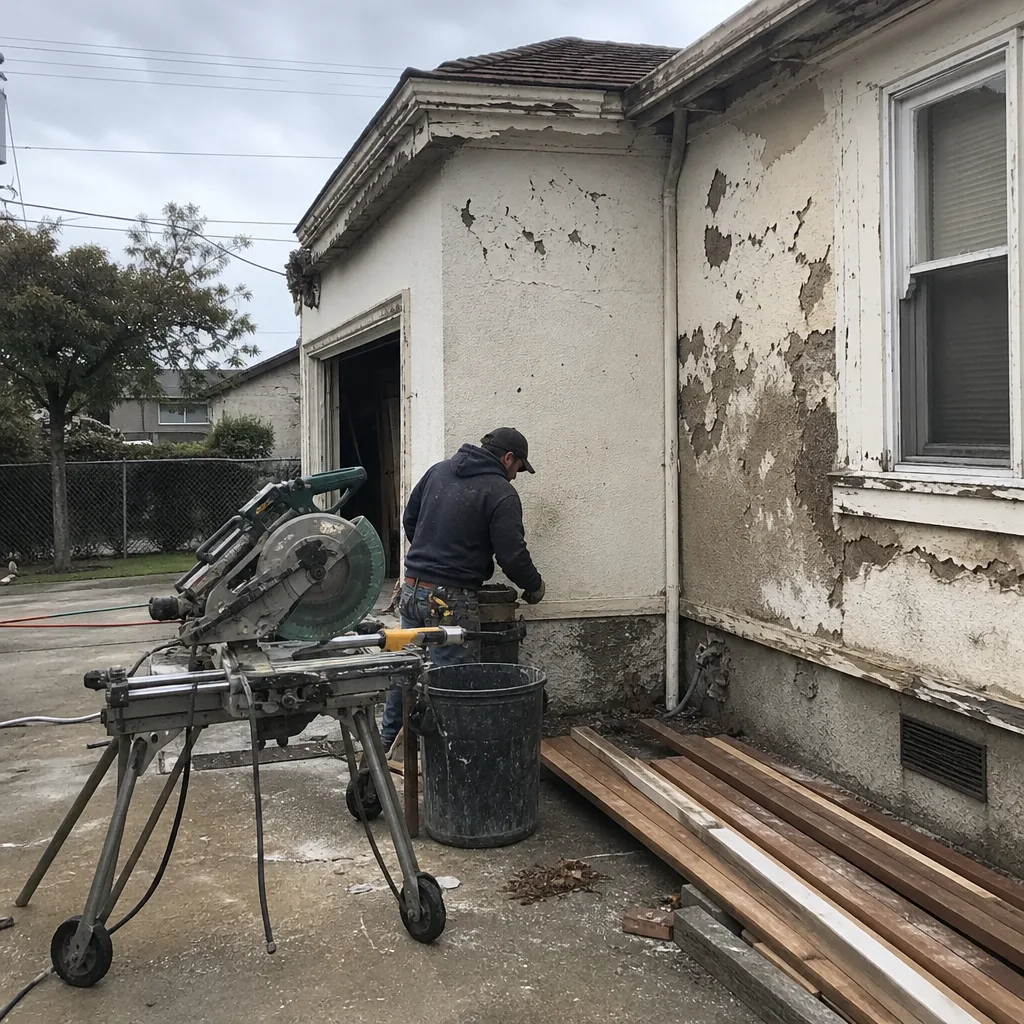 Before
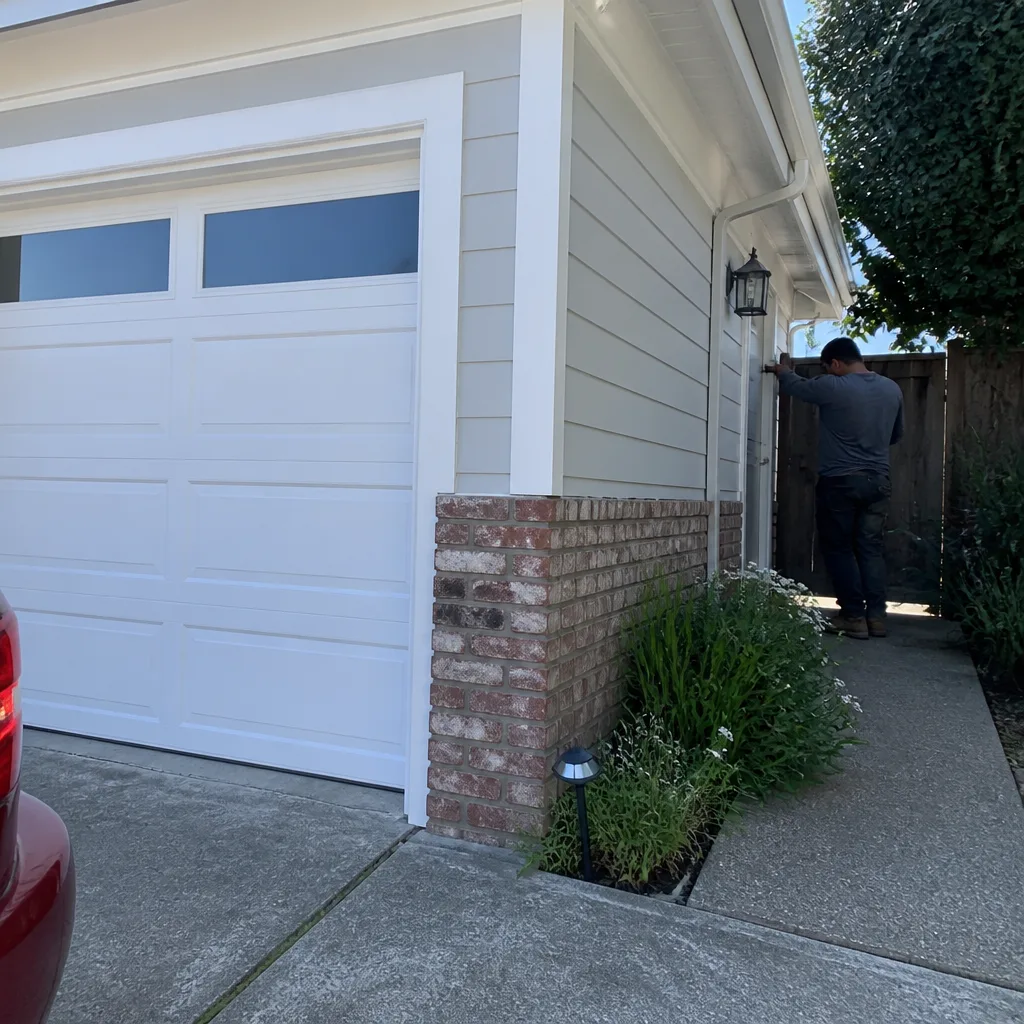 After
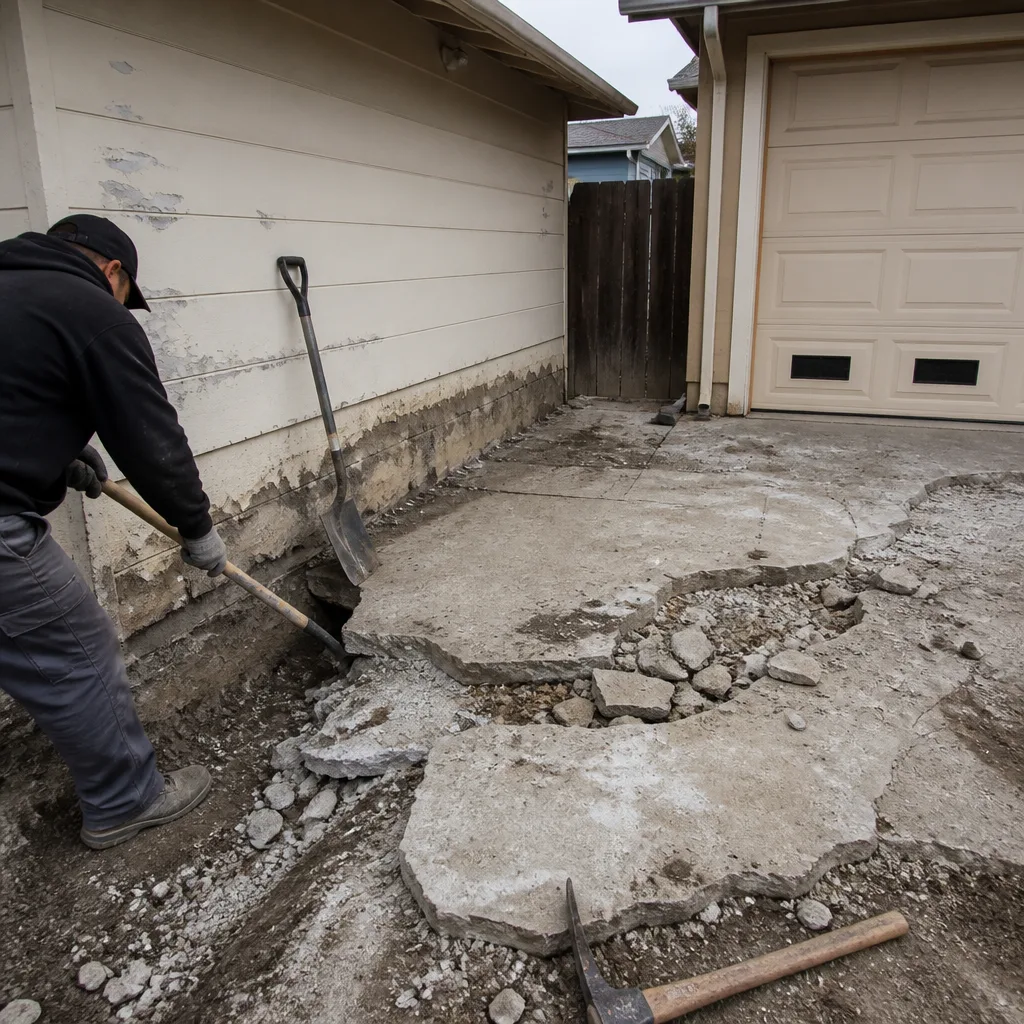 Before
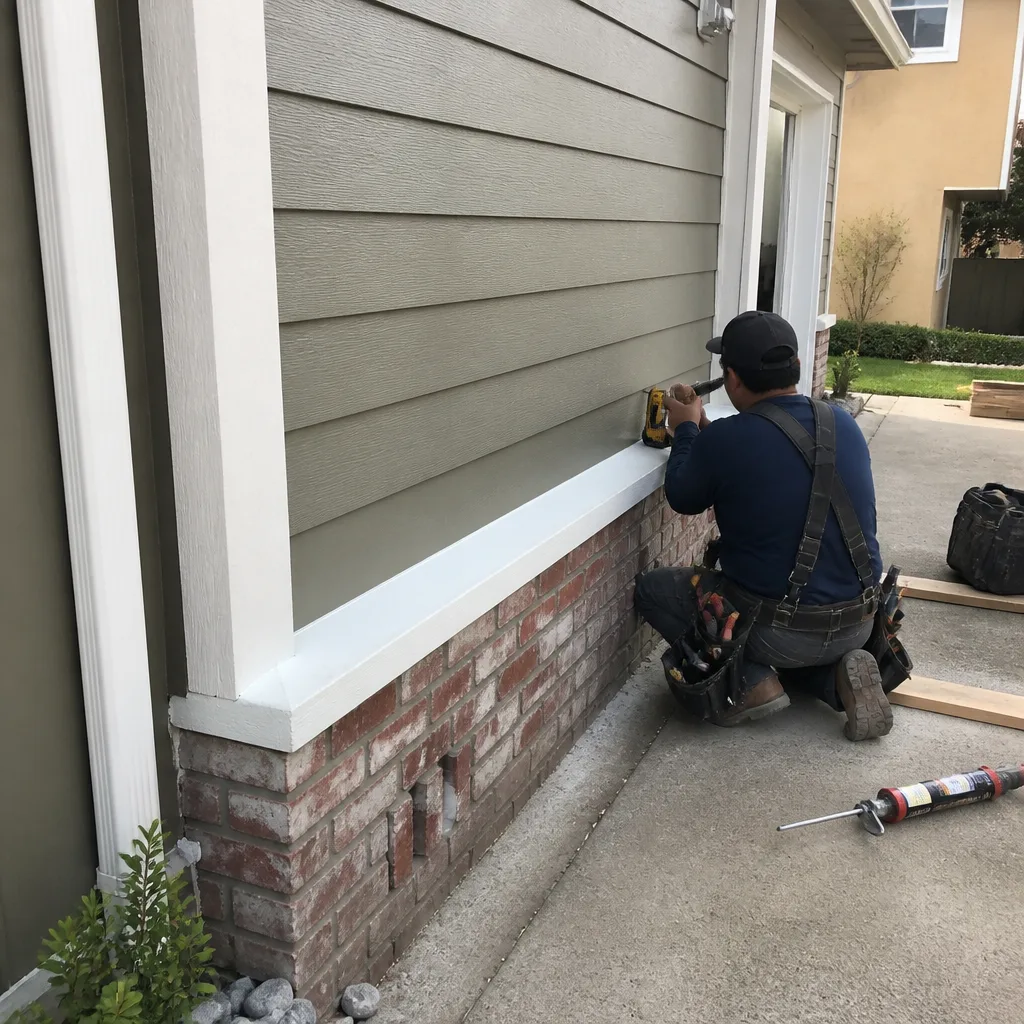 After
 Before
 After