
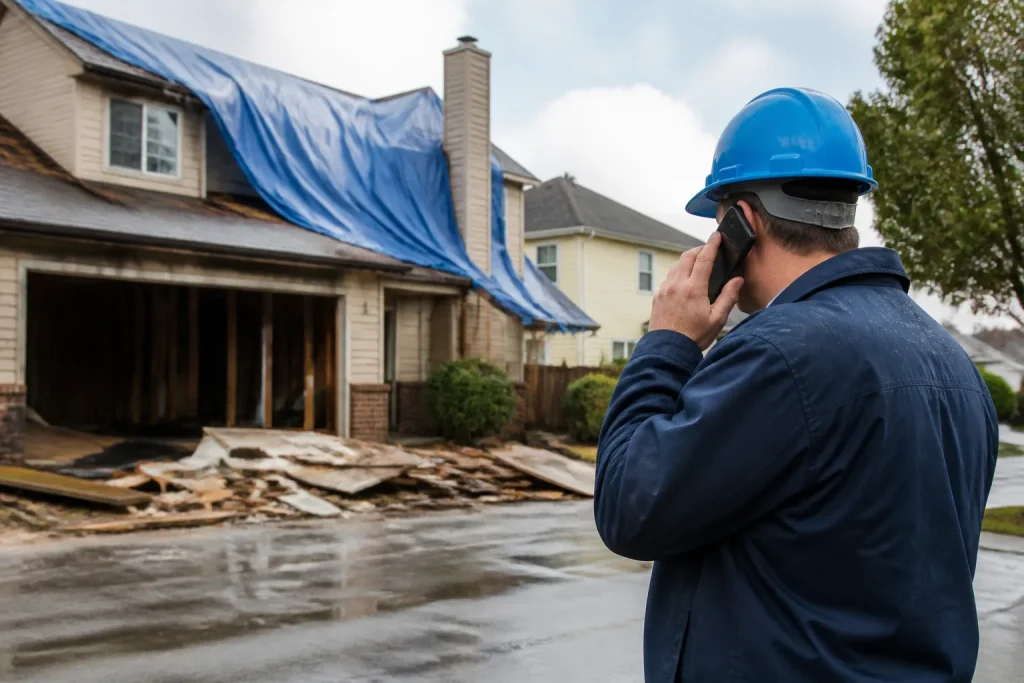
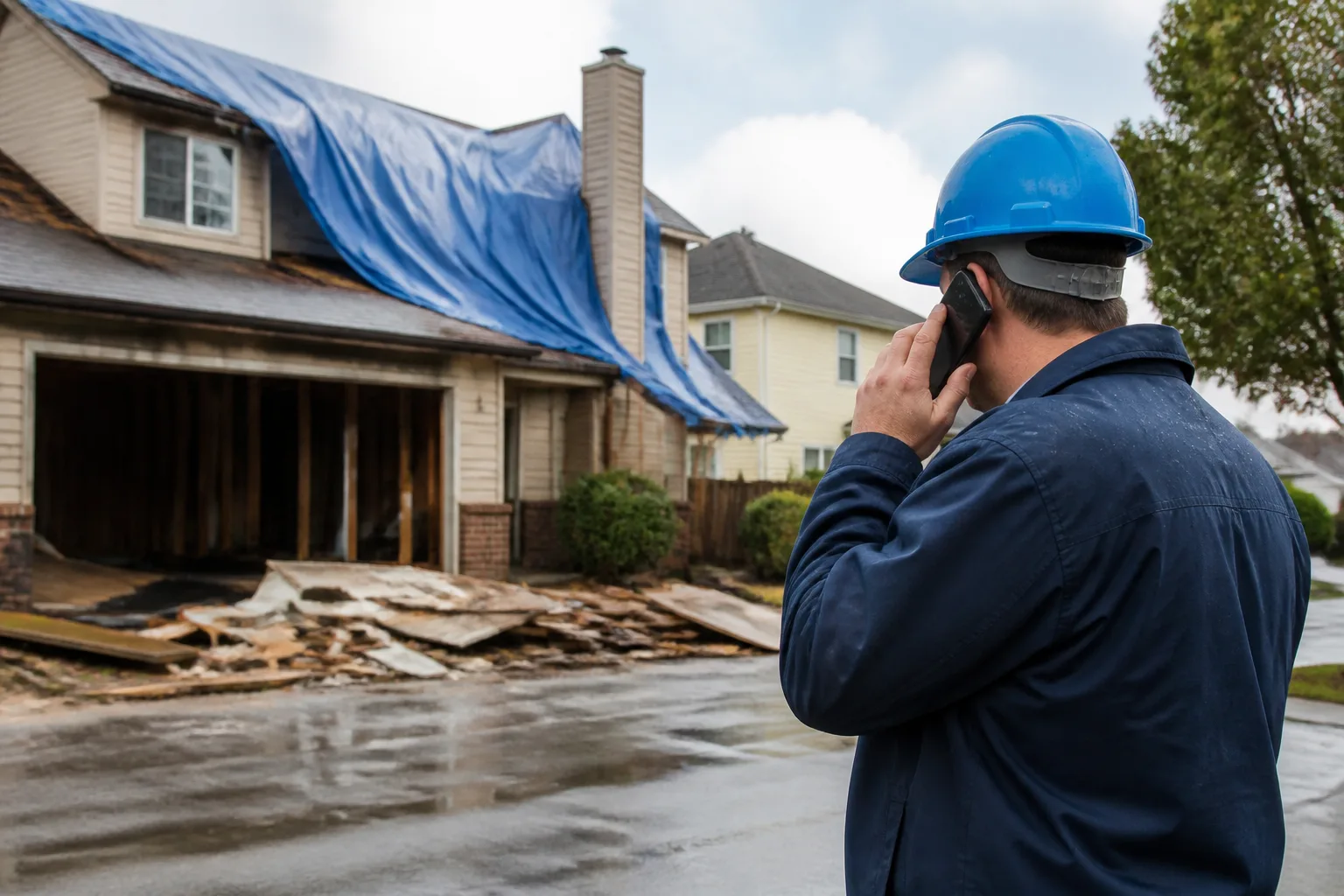
Emergency General Contractor Near Me: What San Bruno Homeowners Should Do First
If you’re staring at a burst pipe, a cracked retaining wall, or daylight through your roof, the first call you make should not be to a general contractor. It should be to your camera roll. Document everything before anyone touches the site, because once a contractor starts moving debris or “temporary” fixes go in, your insurance adjuster has less to work with and more room to argue. Here’s the sequence that protects your claim and gets the right help fast.
If you’d rather not sort through it alone, call San Bruno Construction home at (866) 472-1908 and we’ll walk you through the first hour step by step.
What Actually Happens in the First 60 Minutes
Most homeowners lose money in the first hour, not because they call the wrong person, but because they skip documentation and jump straight to repair. Here’s the order that works.
1. Photograph everything before you move anything. Wide shots of the room, close-ups of the damage, and context shots showing what was there before the failure. If water is involved, photograph where it’s pooling, where it’s running, and what it’s soaked. Insurance adjusters work from evidence, not your memory.
2. Shut off the source if you can do it safely. Water main, gas valve, or breaker. But do not touch the damaged area itself until you’ve got photos. Moving a wet cabinet or pulling back peeling drywall before the adjuster sees it can weaken your claim because the full extent of damage is no longer visible.
3. Call your insurance company, not a contractor. Get a claim number started. Ask what documentation they require for emergency mitigation. Some policies require you to use their approved vendors for water extraction; others let you choose. Know before you hire.
We’ve pulled wet drywall out of a home in San Bruno only to find the homeowner had already stripped the wall themselves to “help.” The insurer then argued the damage looked worse because of the homeowner’s removal, not the leak. That mistake cost them three weeks of back and forth. Document, shut off, call insurance, then call us.
Emergency Mitigation vs. Emergency Repair: Know the Difference
These are not the same thing, and mixing them up is how homeowners end up with a crew doing the wrong work at the wrong time.
Emergency mitigation means stopping the bleeding. That’s water extraction, tarping a roof, boarding up a window, or shoring a sagging floor. It prevents further damage. Mitigation companies handle this fast, and your insurer may require it within 24 – 48 hours to keep your claim valid.
Emergency repair means fixing the source. That’s replacing the failed pipe, repairing the roof deck, or rebuilding the retaining wall. This is where a general contractor comes in, and it usually starts after mitigation is done and the adjuster has documented the scene.
In Santa Cruz County, a full-scope general contractor like San Bruno Construction coordinates both phases. We don’t extract water ourselves, but we work with mitigation crews, then take over the rebuild with our own team of licensed trades. One point of contact from tarp to final inspection.
What “Emergency GC Response” Actually Means in San Bruno
Let’s be honest about what’s realistic. On the Peninsula, a legitimate emergency general contractor response means someone answers the phone, you speak to a person who knows construction, and a site visit happens within a day or two, not in the next hour. Anyone promising a crew at your door in 20 minutes is either an upsell machine or a subcontractor with nothing else on the schedule.
Here’s what a real emergency call-out in San Bruno looks like:
- Phone assessment first. We ask about the source, the extent, and what you’ve already shut off. If there’s active water or structural movement, we tell you to call mitigation or a structural engineer first. That’s not passing the buck; that’s the correct sequence.
- Site visit within 24 – 48 hours. We walk the property, document with our own photos, and create a written scope of what needs to happen and in what order.
- Line-item estimate, not a ballpark number. Emergency work often means unknowns, but a legitimate contractor will tell you what they know, what they suspect, and what the cost ranges are. Anyone who gives you one number before opening a wall is guessing.
- Coordination starts immediately. While we’re on site, we’re already flagging which trades will be needed: plumber, electrician, roofer, drywall, paint. You don’t call five vendors. We do.
We coordinate the trades so you don’t have to. That’s the whole point of hiring a general contractor instead of a string of specialty crews that don’t talk to each other.
Why a Full-Scope GC Beats Calling Five Vendors in a Crisis
When a pipe bursts in a San Bruno hillside home, the damage rarely stays in one room. Water runs down. It finds the floor joists, the ceiling below, the drywall, the baseboards, maybe the subfloor. That’s plumbing, carpentry, drywall, paint, and flooring. Five different trades if you’re managing it yourself.
A full-scope general contractor dispatches all of them in sequence. We know that the plumber fixes the pipe first, then the drywall crew comes after the mitigation dries everything out, then paint and flooring. We schedule it in the right order, inspect each phase, and you sign one contract.
That’s where the value of a company like San Bruno Construction shows up in an emergency. We carry relationships with 50+ product brands across every category, so when the damaged area needs new flooring or a replaced cabinet, you’re choosing from real options like Belgard pavers for a damaged hardscape or Unilock for a retaining wall rebuild, not just whatever the subcontractor has in the truck.
Here’s a quick look at what that coordination looks like in practice:
| Damage Type | Trades Involved | GC’s Role |
|---|---|---|
| Burst pipe, two rooms affected | Plumber, mitigation, drywall, paint, flooring | Schedules in order, inspects each phase, one contract |
| Storm damage to roof and siding | Roofer, siding installer, insulation, drywall | Coordinates roof repair before interior work begins |
| Retaining wall failure | Engineer, excavation, masonry, hardscape | Manages engineering sign-off, then rebuild |
If your emergency involves a failed retaining wall or damaged hardscaping, we can source materials from Belgard, Unilock, or Tremron depending on the look you want and the load the wall needs to carry. That choice matters more than most homeowners realize.
Insurance Claim Documentation: What Your GC Should Produce
Here’s where homeowners get taken advantage of, and it’s rarely by the contractor. It’s by the insurance process itself. Adjusters are trained to write scopes that favor the insurer. If your contractor doesn’t push back with documentation, you’ll get a check that covers half the actual repair.
A legitimate emergency general contractor should produce these documents for your claim:
- Photo log with timestamps. Every image we take on site gets logged and labeled. It becomes part of the claim file.
- Written scope of work. This is not an estimate. It’s a description of what failed, what was affected, and what needs to be done to restore the home to pre-loss condition. The language matters because adjusters key on specific terms.
- Line-item cost estimate. Not a lump sum. Every trade, every material, every phase gets its own number. That lets the adjuster see exactly what they’re approving or rejecting.
- Supplementary documentation when the adjuster’s scope is too small. This is the big one. We regularly see adjusters write scopes that miss code-required work, like upgrading electrical to current code after a panel gets wet. We document the requirement, cite the code section, and submit the supplement. That’s how you get paid what you’re owed.
If your insurer pushes back, don’t accept the first offer out of relief that they’re covering something. Ask your contractor to review the adjuster’s scope against theirs. That gap is where legitimate claims get underpaid.
When to Call a Pro (and When to Wait)
There’s a difference between an emergency and an urgently annoying problem. A cracked tile is not an emergency. A cracked foundation beam is.
Call a pro immediately if: water is actively flowing where it shouldn’t be, you smell gas, the structure is visibly sagging or shifting, or you can see daylight through your roof or walls.
You have a day or two if: the damage is contained, no active water or structural movement, and the area can be isolated until someone gets on site. In that case, take photos, shut off what you can, and call for a site visit rather than a 2 a.m. dispatch.
One more thing worth knowing: after a storm, reputable contractors in San Bruno get booked fast. If you wait until the rain stops to make the call, you’re behind every other homeowner on the Peninsula with a leak. Call early, get on the schedule, and we’ll work with your insurer on timing.
Related Services in San Bruno
Most “emergency” calls we take turn out to be symptoms of a larger renovation need. A failed window flashing leads to a full exterior envelope conversation. A retaining wall crack turns into a hardscape redesign. If you’re already dealing with damage, it’s worth asking what the next five years look like for that part of the house.
For broader work after the emergency is handled, we offer Home Remodeling in Santa Cruz and Home Renovation in Santa Cruz, along with full General Contractor in Santa Cruz services. If you’re on the San Bruno side of the hill, the same team covers your project.
What happens when you call
- 1
A real person answersNo phone trees — you reach a local pro.
- 2
You get an upfront price rangeHonest numbers before anyone is dispatched.
- 3
A background-checked tech heads outLicensed & insured, dispatched right away.
- 4
You approve before work beginsNothing starts until you say go.
The Bottom Line
The order of operations matters more than speed. Document first. Shut off the source. Call your insurer. Then call a general contractor who can coordinate the rebuild with a written scope and line-item pricing that protects your claim. Emergency work in San Bruno isn’t about who shows up fastest; it’s about who shows up prepared.
If you’re in San Bruno and need help, San Bruno Construction offers free estimates. Call (866) 472-1908 and we’ll walk you through the first hour, the claim, and the rebuild.
Frequently Asked Questions
For active structural or water emergencies, we aim for a phone assessment immediately and a site visit within 24 – 48 hours. True emergency response rarely means a crew on site within the hour; it means someone qualified is assessing the situation and sequencing the right trades. Call (866) 472-1908 and we’ll tell you honestly what the timeline looks like for your situation.
Your insurance company first, after you’ve photographed the damage. Getting a claim number started protects you and starts the clock on any deadlines your policy includes. Then call a contractor to begin the scope-of-work documentation. Call (866) 472-1908 for a free estimate on the repair side.
That’s common, and it’s usually a scope gap, not a pricing dispute. Ask your contractor to compare line items against the adjuster’s scope and document any code-required work the adjuster missed. A supplementary claim can close the gap. We do this regularly for San Bruno homeowners.
Yes, if they’re a full-scope general contractor. San Bruno Construction coordinates plumbing, electrical, roofing, drywall, paint, and flooring through one contract, so you’re not managing five vendors while dealing with an insurance claim. Call (866) 472-1908 to talk through what your specific repair involves.
Written by the team at San Bruno Construction, serving San Bruno since 2016.
Need Construction Help?
Call San Bruno Construction — licensed & insured, here with fast after-hours help in San Bruno.
(866) 472-1908