
Last updated October 30, 2026
 Home additions & ADU
 Kitchen remodeling
 Bathroom remodeling
 Roofing
 Windows & doors
 Driveway & pavers
 Fence
Free written scope consultation - allowances, timeline, and change-order rules on paper before a single trade is scheduled
General Contractor Maintenance Checklist for San Bruno Homeowners
A general contractor doesn’t see a house the way a homeowner does. We see the caulk joint that failed two winters ago and the subfloor that’s been silently absorbing moisture ever since. We see the downspout that empties three inches from the foundation and the retaining wall that’s holding, but only barely. This checklist is built from that perspective. It’s organized around what actually fails in San Bruno homes, not what a generic California maintenance guide tells you to check. You’ll learn which tasks protect your biggest investment, which ones quietly void contractor warranties when skipped, and which inspections genuinely require General Contractor services with a licensed eye. This isn’t another recycled regional filler list. It’s the checklist we’d hand a friend who just bought a house in San Bruno.
Quick Answer
A San Bruno home maintenance checklist prioritizes moisture control at window frames and exterior envelope seams due to daily coastal fog, drainage and retaining wall inspection on hillside lots, and documented annual servicing of major systems to keep contractor and manufacturer warranties valid. The most cost-effective approach for San Bruno homeowners is a twice-yearly inspection rhythm: exterior envelope in spring after winter rains, and interior systems in fall before the wet season returns. For How to Hire a Construction Contractor in San Bruno: A Step-by-Step Guide, see our dedicated resource.
Styles & brands we work with
Table of Contents
- Understanding San Bruno’s Climate Load on Your Home
- Exterior Envelope: Where Fog Becomes a Structural Problem
- Hillside Drainage and Retaining Walls: The San Bruno Wildcard
- Roof and Gutter Maintenance in a Fog Belt
- Interior Systems: Plumbing, Electrical, and the Warranty Paper Trail
- Wildfire Risk Zone Adjacency: What Insurance Wants to See
- Building a Capital Improvement Plan From Your Maintenance Log
- What You Can Do Yourself vs. What Needs a Licensed Eye
Understanding San Bruno’s Climate Load on Your Home
San Bruno sits in a specific meteorological pocket that creates predictable failure patterns in residential construction. The city gets roughly 19 inches of rain annually, but that number understates the moisture load. The daily fog cycle from the Pacific pushes damp air against west-facing facades for hours at a time, even during dry months. Wood siding, painted trim, window frames, and any exposed fastener absorb that moisture repeatedly. Then the afternoon sun bakes it out. That wet-dry cycling is exactly what causes caulk joints to crack, paint to peel at a faster rate than inland communities, and wood window sills to develop soft spots.
Homes in the San Bruno hills above Interstate 280 face additional wind exposure. Sustained ocean winds carry fine salt particulate that accelerates corrosion on exterior metal components: flashing, vents, gutter hangers, and even the springs on garage doors. Homes in the flatlands west of El Camino Real tend to get more direct fog exposure than those east of the freeway. If your house sits on the western slope of the city, you should inspect caulked exterior joints every four to six months instead of annually. The fog doesn’t read a calendar.
Older San Bruno housing stock compounds this. A significant portion of the city’s single-family homes were built between 1940 and 1975, an era before modern air-sealing standards and moisture barriers. Those homes were designed to breathe, which means they also absorb. If you own a home from that period, the maintenance checklist isn’t optional. It’s the difference between catching a $400 window recaulk early and replacing a $3,500 window frame plus the framing lumber behind it.
We start every San Bruno maintenance conversation with the same line: the climate here doesn’t punish neglect on a schedule. It punishes neglect on the first foggy morning after a crack opens. The sections below walk through the specific failure points we see most when called in after deferred maintenance has already done its work, and for General Contractor Troubleshooting: Common Problems and How to Fix Them, see our companion guide.
Exterior Envelope: Where Fog Becomes a Structural Problem
The exterior envelope is everything that separates conditioned interior space from San Bruno’s damp air: siding, trim, windows, doors, caulk joints, and exterior wall penetrations. This is where we see the most expensive deferred maintenance in the city.
Window Frames and Caulk Joints
Walk the perimeter of your home twice a year, spring and fall, and look at every window frame from a few inches away. You’re checking for cracked caulk, gaps between the trim and the siding, and any place where the wood feels soft when pressed with a finger or the edge of a key. On the west-facing windows especially, fog-driven moisture finds any opening and works its way inward. A hairline crack in a caulk bead that looks cosmetic in March is a water channel by November.
- Spring inspection: Recaulk any crack wider than the edge of a credit card using a high-quality exterior polyurethane caulk, not cheap latex painter’s caulk.
- Fall inspection: Repeat the walk before the rainy season. Pay extra attention to the top casing of windows, where water tends to pool before it finds a path down.
- Document annually: Take date-stamped photos of your exterior caulk work. This matters for the warranty section later in this guide.
Door Thresholds and Weather Stripping
Exterior doors in San Bruno fail in two predictable ways. First, the threshold seal compresses over time and lets driving rain seep under the door during winter storms, when wind blows rain almost horizontally up the hill. Second, the door’s bottom sweep or side weather stripping wears out, creating a draft that costs you heating dollars and invites moisture. Both are inexpensive to fix and commonly ignored. If you can see daylight under any exterior door from inside the house on a bright day, that’s a problem worth solving within a month.
Siding Checks
For homes with wood siding, the San Bruno fog accelerates paint failure in predictable patterns. Check the bottom edge of lap siding near the ground and any spot where a downspout runs close to the wall. These areas stay damp longest and peel first. For homes with James Hardie fiber cement siding or similar cement-board products, the maintenance load is significantly lighter, but the trim and caulk joints still need the same attention. The siding itself won’t rot, but the wood framing behind it will if water finds an unsealed seam.
One of the advantages of fiber cement siding from James Hardie is that it’s engineered for exactly this kind of wet-dry cycling. When we replace siding on a San Bruno home, material selection matters as much as installation technique. The product has to be right for the climate.
Hillside Drainage and Retaining Walls: The San Bruno Wildcard
Most home maintenance checklists never mention retaining walls or hillside drainage. That’s because most checklists are written for flat suburban lots in places that don’t look like San Bruno. Here, a significant percentage of homes sit on slopes or below upslope properties, which means water management is not a landscaping preference. It’s a structural necessity.
Water flowing down a hillside doesn’t need an opening to create a problem. It carries soil with it, and over successive winters, that soil movement changes where water goes. A downslope foundation that was properly waterproofed twenty years ago may now be receiving runoff that a neighbor’s new patio or a failed upslope swale directs straight at it.
Here’s the step-by-step we recommend for hillside and drainage evaluation every fall:
- Inspect surface drainage during a real rain, not a drizzle. Go outside in rain gear and watch where water sheets off your property and where it ponds. Ponds that form within ten feet of the foundation are red flags.
- Check all downspouts and splash blocks. Each downspout should discharge at least four to six feet from the foundation, angled downhill. San Bruno’s hillside lots don’t forgive substandard downspout extensions.
- Walk every retaining wall on the property. Look for bulging sections, new cracks, mortar deterioration, and any spot where the wall has started to lean. Small movement in a wall that’s six feet tall is a large warning sign.
- Check weep holes. Retaining walls built with drainage systems have weep holes at the base. If they’re clogged with soil or debris, hydrostatic pressure builds up behind the wall, which is how walls fail. Clear them with a stiff wire or a small drain brush.
- Document any changes from the previous year. A photo record of a crack that hasn’t moved in three years is a useful piece of evidence. A crack that widened by half an inch in one season means you need a structural assessment.
If you have interlocking concrete pavers from Cambridge Pavers, Oldcastle, or similar manufacturers installed on your property, their performance depends directly on the base and drainage beneath them. Pavers themselves don’t fail. Their base does, and the first sign of base failure is usually water pooling on the paver surface or pavers that have started to sink or shift. If you see that, address the drainage before you rebuild the surface.
Roof and Gutter Maintenance in a Fog Belt
San Bruno roofs contend with two forces that inland roofs don’t: persistent moisture and salt-laden wind. The fog keeps roofs damp for longer portions of the day, which accelerates moss and algae growth, especially on north-facing roof planes that never fully dry. The wind tests the mechanical fastening of every flashing, vent, and gutter hanger.
Gutter Cleaning
Gutters in San Bruno should be cleaned at least twice a year. The city’s mature tree canopy drops leaves, needles, and seed pods that, combined with the damp climate, break down into a dense sludge that clogs downspouts faster than you’d expect. A clogged gutter overflows against the fascia board, and the fascia in San Bruno is often the original board from the home’s construction. Replacing a fascia board is not a big project. Replacing the rafter tails behind it because decay spread before you noticed is a bigger one.
While you’re cleaning, check the gutter hangers. Wind loosens them over time, especially on roof edges that face the open bay. A gutter that’s pulled away from the fascia lets water run down the wall behind it, which is exactly the kind of quiet moisture intrusion that becomes a major repair years later.
Roof Inspection
Twice a year, from the ground or a ladder, look for:
- Curled or cracked shingles at the roof edges, particularly on the windward side of the house.
- Flashing separation around chimneys, skylights, and plumbing vents. The thermal expansion and contraction from daily fog-to-sun cycles loosens the sealant on flashing faster in San Bruno than in drier climates.
- Missing granule patches on asphalt shingles, which show up as lighter or balding areas.
- Any sign of moss or algae growth, especially on north-facing planes.
When a roof does need replacement, material selection matters in this climate. GAF, CertainTeed, Owens Corning, and other major manufacturers all offer shingle lines designed to resist algae growth and handle high-wind conditions. The right product for a San Bruno roof is one that’s rated for the specific combination of fog, wind, and salt exposure we get here, not just the cheapest architectural shingle on the shelf.
One more note on gutters: if your home has downspouts that tie into underground drainage lines, test those lines annually by running a hose into the downspout and checking that water exits somewhere appropriate. Underground drain lines in older San Bruno homes are often clay tile, and roots love damp clay tile joints. A broken underground line can discharge water against your foundation for a full winter before you notice anything wrong inside the house.
Interior Systems: Plumbing, Electrical, and the Warranty Paper Trail
The systems inside your walls need scheduled attention too. This is where skipping maintenance doesn’t just cost you a repair. It can cost you the warranty on the repair you eventually need.
Plumbing
San Bruno’s older housing stock includes a meaningful percentage of homes with original galvanized steel supply lines. Galvanized lines corrode from the inside out, and the typical failure mode is a sudden pinhole leak or a slow loss of water pressure over time. The maintenance task here is observation. Every few months, open the cabinets under kitchen and bathroom sinks and look for any sign of moisture, mineral staining, or drips. Check visible water lines in basements and crawl spaces too. If you notice your water pressure has dropped noticeably in one fixture but not others, that’s an early warning sign of galvanized line corrosion inside that branch.
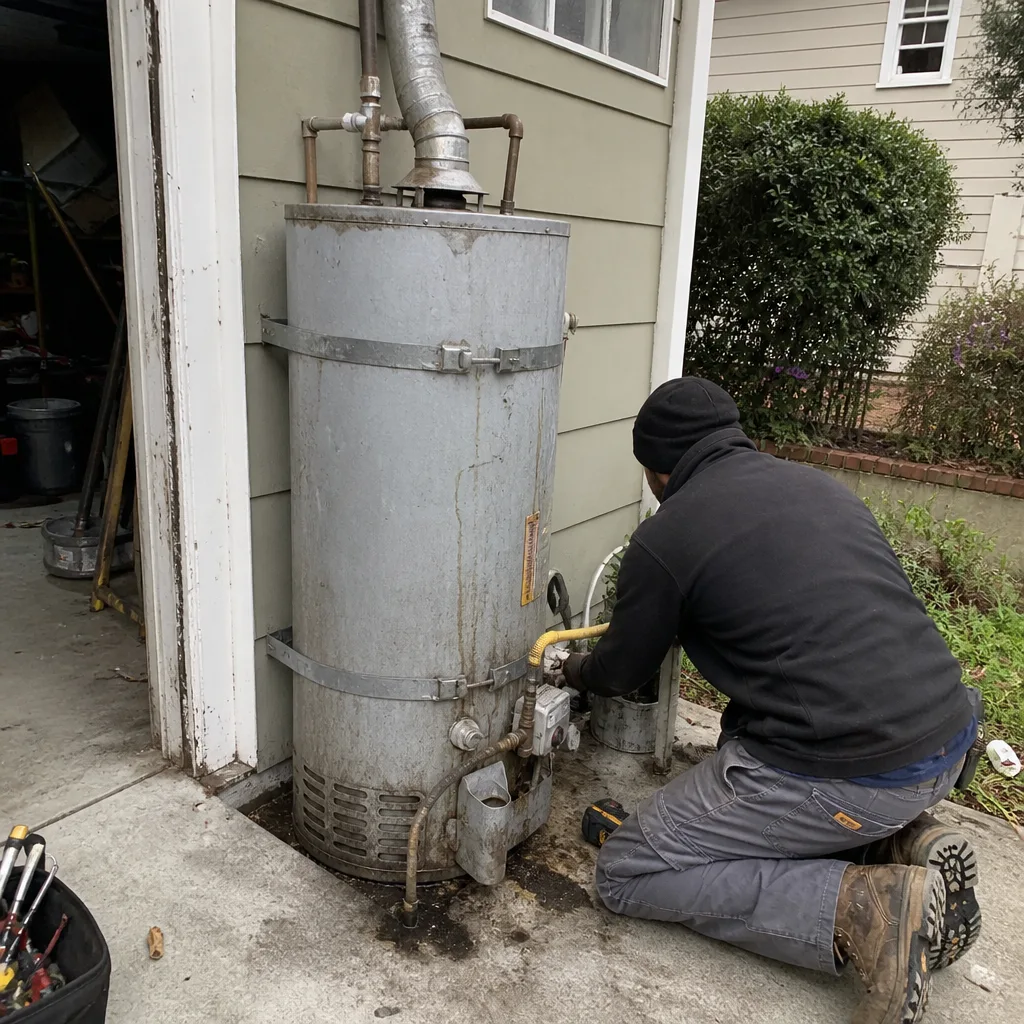
Water heaters deserve an annual flush to remove sediment buildup, especially in areas with hard water. San Bruno’s water supply is moderately hard, which means sediment accumulation is a steady reality. A water heater that’s never been flushed has to work harder, runs less efficiently, and fails sooner. If you’re not comfortable doing the flush yourself, it’s a simple service call for a plumber.
Electrical
Homes built before 1975 in San Bruno may still have electrical panels that were updated at some point, but the branch wiring in the walls may be aluminum or ungrounded copper. Neither is an immediate emergency, but both require informed attention. Annual electrical maintenance means checking that all outlets and switches function without warmth, that no circuits trip repeatedly, and that your panel isn’t showing any signs of discoloration, rust, or buzzing. If you see any of those signs, call a licensed electrician before the problem escalates.
Any electrical work beyond replacing a light fixture should be handled by a licensed electrician. San Bruno Construction coordinates licensed electrical trades as part of larger renovation projects rather than performing electrical work in-house, and that’s the right framework for homeowners to think about any system that can cause damage or injury when installed incorrectly.
Warranty Documentation
Here’s the part most homeowners miss. Manufacturer warranties on major systems often include a maintenance requirement clause. Roofing manufacturers expect periodic inspection and debris removal from roof penetrations. HVAC manufacturers expect filter changes at specified intervals. Water heater manufacturers expect annual flushing in hard water areas. If you skip the maintenance and then file a warranty claim, the manufacturer can deny it on the grounds of neglect.
More relevant to San Bruno homeowners: contractor workmanship warranties often hinge on the homeowner maintaining the work. A new exterior caulk job, a new window installation, or a new siding replacement all have expected maintenance. If you don’t recaulk, keep gutters clear, or maintain drainage, and the work fails as a result of that neglect, the contractor’s warranty obligation ends.
The practical answer is documentation. Keep a simple home maintenance log, digital or paper, with date-stamped photos of the work you do. Write down the dates of gutter cleanings, caulk repairs, water heater flushes, and roof inspections. If you ever need to make a warranty claim, that record turns a “he said, she said” conversation into a straightforward one.
For a deeper look at what’s involved in a full Home Renovation in Santa Cruz or San Bruno, the same documentation principle applies across the board: the systems you maintain are the systems that last.
Wildfire Risk Zone Adjacency: What Insurance Wants to See
San Bruno sits adjacent to open space with a wildfire risk profile that has changed materially over the last decade. The hills around the city, including areas near Sweeney Ridge and the San Bruno Mountain State Park to the north, present a real wildfire exposure. Homeowners in the wildland-urban interface zones now face insurance requirements that didn’t exist a generation ago.
Insurance carriers in California have become aggressive about non-renewal and premium increases for properties in wildfire-adjacent zones. Many of the reasons for non-renewal are maintenance items. Insurers want to see:
- Defensible space: brush, dead vegetation, and tree limbs cleared at specific distances from the structure. In San Bruno, this typically means maintaining a cleared zone of at least five feet immediately around the home, often called “zone zero,” plus a managed zone beyond that.
- Roof condition: missing shingles, accumulated leaf litter in valleys, and clogged gutters are all cited by insurers as wildfire risk factors. The same gutter and roof maintenance that protects against moisture intrusion also protects your insurability.
- Vent screening: ember intrusion into attic spaces through unscreened vents is a primary wildfire home-loss mechanism. Insurers and building codes increasingly require fine mesh screens on attic and crawl space vents. Check yours annually and replace any damaged screens.
- Exterior deck conditions: wood decks accumulate debris between boards, which is ember fuel. Composite decking doesn’t eliminate the issue but changes the maintenance picture.
The maintenance angle here is simple: document your work. The same photo log that protects your contractor warranties also answers an insurance company’s questions about property upkeep. If an insurer sends an inspector and the inspector finds unmaintained gutters, dead vegetation against siding, or a roof with accumulated debris, that gets noted in your file. Do the work, take the photos, and keep the record.
If you’re planning exterior work in the wildfire-adjacent zones of San Bruno, material selection matters. James Hardie fiber cement siding carries a noncombustible classification that some insurers recognize, and certain roofing materials are rated for wildfire resistance. Ask your insurance agent what they want to see before you select products. The wrong choice can cost you more on the insurance side than you saved on materials.
Building a Capital Improvement Plan From Your Maintenance Log
Here’s where the maintenance checklists pays off beyond preventing repairs. Your annual maintenance walk-through generates the data that turns reactive emergencies into planned, budgeted improvements.
Most San Bruno homeowners renovate reactively. The water heater fails, so they replace it. The siding starts to fail, so they spot-repair it. The kitchen reaches a breaking point, so they remodel it. That’s expensive. It means paying emergency pricing, living with the inconvenience, and making material decisions under pressure.
The alternative is a capital improvement plan. It works like this:
- During each maintenance inspection, note anything that’s functional but aging. A roof that’s 18 years old. Windows that are original from 1962. A water heater that’s been flushed faithfully for 12 years but is approaching the end of its expected life.
- Add each item to a list with an estimated remaining service life. You don’t need to be exact. The point is to see, in one place, what’s coming due over the next three to five years.
- Group items by project scope. If you’re replacing windows, that’s also the right moment to redo the exterior caulk, replace trim, and consider exterior painting. If you’re replacing the roof, that’s the moment to upgrade attic insulation and address vent screening for wildfire compliance. Bundling eliminates duplicate labor and mobilization costs.
- Price the grouped project with a general contractor, not as a series of individual replacements. This is where the single-contractor model matters. A general contractor who coordinates all trades can sequence the work so that you’re not paying for demo and reinstall of the same area twice.
This is the advantage of working with a full-scope contractor rather than a patchwork of specialty vendors. If we’re replacing siding, we can assess the window flashing at the same time. If we’re rebuilding a retaining wall, we can evaluate the drainage system that feeds it. The maintenance checklist generates the data; the capital plan turns that data into a budget.
We apply this same principle whether we’re working on a home in San Bruno or on a Home Remodeling in Santa Cruz project. The homeowner who plans from a maintenance log spends less, lives through less disruption, and gets better results than the homeowner who calls us after something has already failed.
What You Can Do Yourself vs. What Needs a Licensed Eye
A useful maintenance checklist doesn’t just tell you what to check. It tells you which checks you can honestly do yourself and which ones you should hand to someone who does this for a living. Explore more guides & resources in our blog for deeper guidance. Getting this wrong costs money in both directions. Some homeowners pay professionals for things they could easily handle themselves. Others attempt things they shouldn’t touch and create larger problems that cost more to fix than the original issue.
Genuine DIY Tasks
- Gutter cleaning and downspout flushing. This is a ladder, gloves, and patience job. If you’re comfortable on a ladder and your roof is a single story or easy two-story access, you can handle this. If you’re not comfortable on a ladder, hire it out without guilt.
- Exterior caulk inspection and recaulking. Cracked caulk is visible caulk. Anyone can learn to identify and repair a failed caulk joint with a $12 tube and a $6 caulk tool.
- Defensible space maintenance. Clearing brush, trimming dead vegetation, and keeping the zone around your foundation free of combustible material is grunt work that needs no special license, just a weekend.
- Visual roof inspection from the ground. You can spot missing shingles, visible flashing separation, or heavy debris accumulation without getting on the roof.
- Water heater flush. With a garden hose and about 45 minutes, most homeowners can handle this. The key is turning off the power or gas correctly first and following the manufacturer’s sequence.
Tasks That Need a Professional Assessment
- Roof inspections from the roof surface. Walking a roof in San Bruno, especially a damp morning roof with moss present, creates real slip risk. If a hands-on roof inspection is needed, hire a roofing professional.
- Electrical panel inspection. Removing a panel dead front exposes live bus bars. This is not a homeowner task. A burned bus bar or loose main lug is invisible until an electrician finds it, and finding it late is expensive.
- Retaining wall structural evaluation. A bulging or leaning retaining wall needs a structural assessment, not a visual once-over. The failure mode of a retaining wall is not gradual and polite.
- Crawl space moisture assessment. If you’re seeing moisture in a crawl space, you need a professional who can trace the source: leaking supply line, groundwater intrusion, condensation from inadequate ventilation, or a roof leak that’s finding its way down the wall cavity. The fix for each source is entirely different.
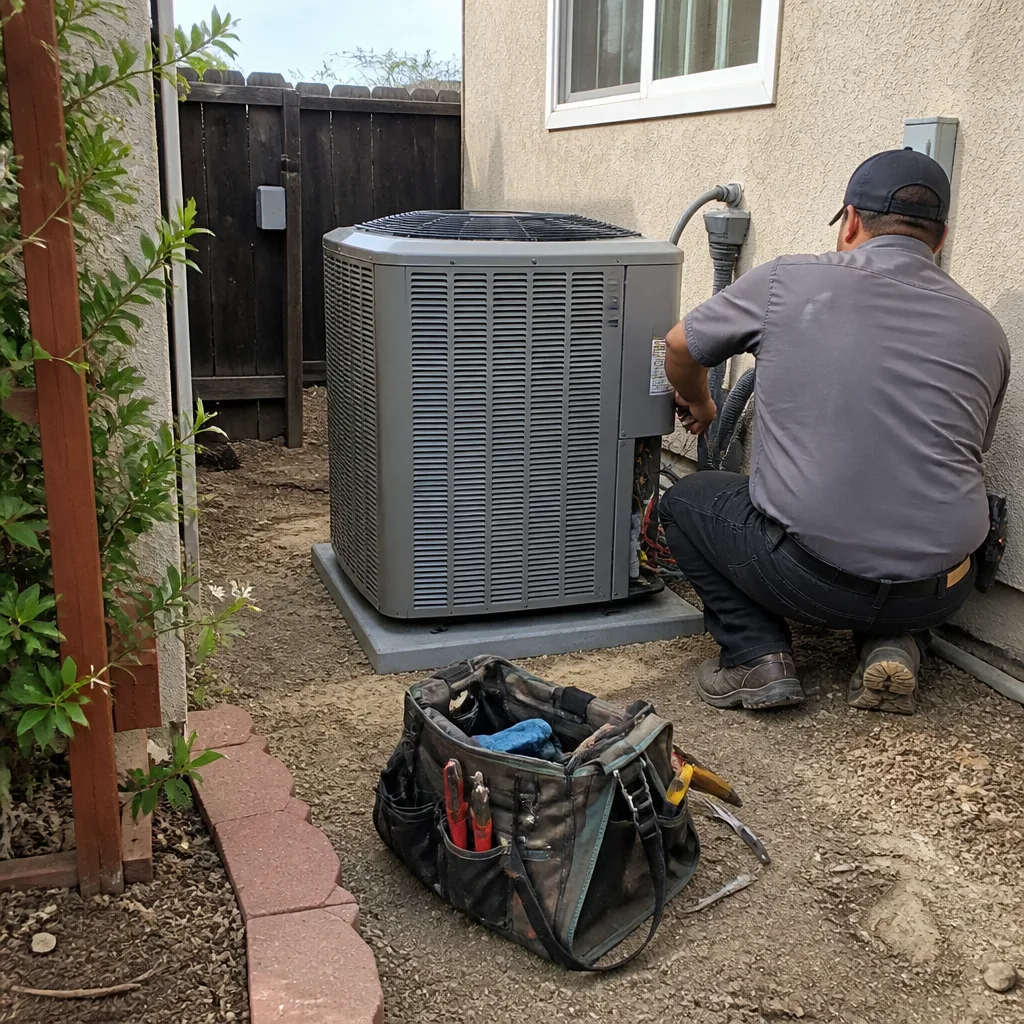
- Gas appliance servicing. Furnaces, water heaters, and gas lines are not DIY territory. Annual furnace servicing is cheap compared to the cost of replacing a heat exchanger or dealing with a carbon monoxide problem that was installed by a well-meaning homeowner.
The honest framework here: you can inspect much more than you can repair. Homeowners should absolutely walk their property with a maintenance list and document what they find. But the threshold for picking up a tool should be crossed only when the job is low-stakes, non-structural, and reversible. Everything else gets a phone call.
For a broader look at how a General Contractor in Santa Cruz or San Bruno coordinates maintenance, inspections, and repair work across all trades, the principle is the same everywhere we work: the homeowner who inspects and documents is always in a stronger position than the homeowner who calls after the failure.
Common Mistakes to Avoid
- Treating fog moisture as a coastal amenity instead of a structural load. San Bruno homeowners who grew up in drier climates underestimate what daily condensation does to wood framing over a decade. A caulk crack that would be cosmetic in Sacramento is a water channel here. Inspect exterior seals every six months, not every few years.
- Cleaning gutters only when they visibly overflow. By the time a gutter overflows visibly, it has likely been backing up against the fascia for weeks. Schedule gutter cleaning on the calendar, twice a year, whether or not the gutters look full from the ground.
- Ignoring downspout discharge points. A splash block that sits six inches from the foundation is directing water into the soil against your footing. Four feet of extension is a $20 fix that prevents a $20,000 foundation repair.
- Failing to document maintenance work. No photo, no record, no warranty protection. An undocumented water heater flush doesn’t help you if the tank fails and the manufacturer asks for maintenance history. Take the photos and write the dates in one consistent log.
- Attempting structural or electrical work as a DIY project. Retaining wall repair and electrical panel work are outside the homeowner envelope. The cost of the mistake is not the cost of the failed DIY repair. It’s the cost of the damage the failed DIY repair causes.
- Waiting until a system fails to plan for replacement. Replacing a water heater, roof, or window package on an emergency timeline means paying emergency prices for materials and labor. Your maintenance log should tell you what’s coming due before it fails.
- Selecting replacement materials without considering San Bruno’s climate. The cheapest roof shingle or the wrong caulk compound will fail faster here than in most of the Bay Area. Material selection for fog, wind, and salt exposure is a long-term cost decision, not a sticker-price decision.
See the difference
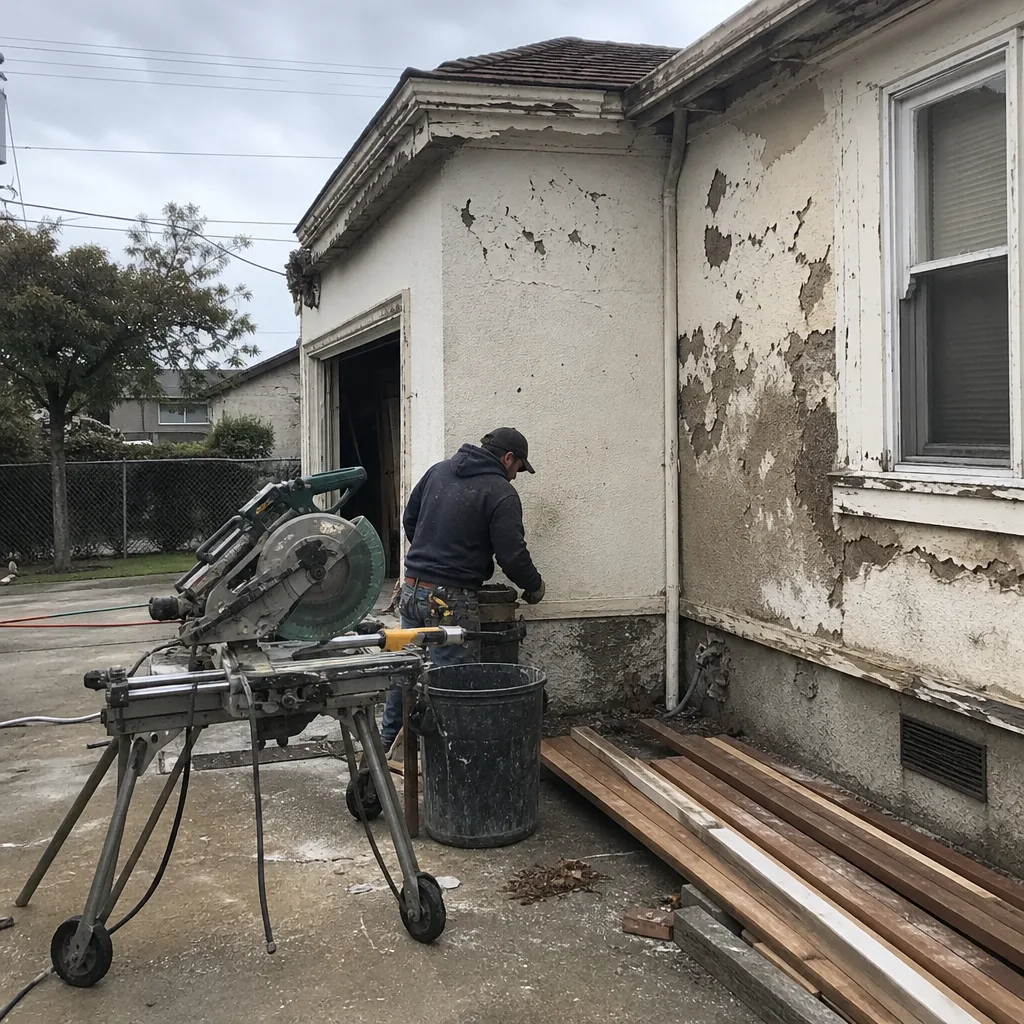 Before
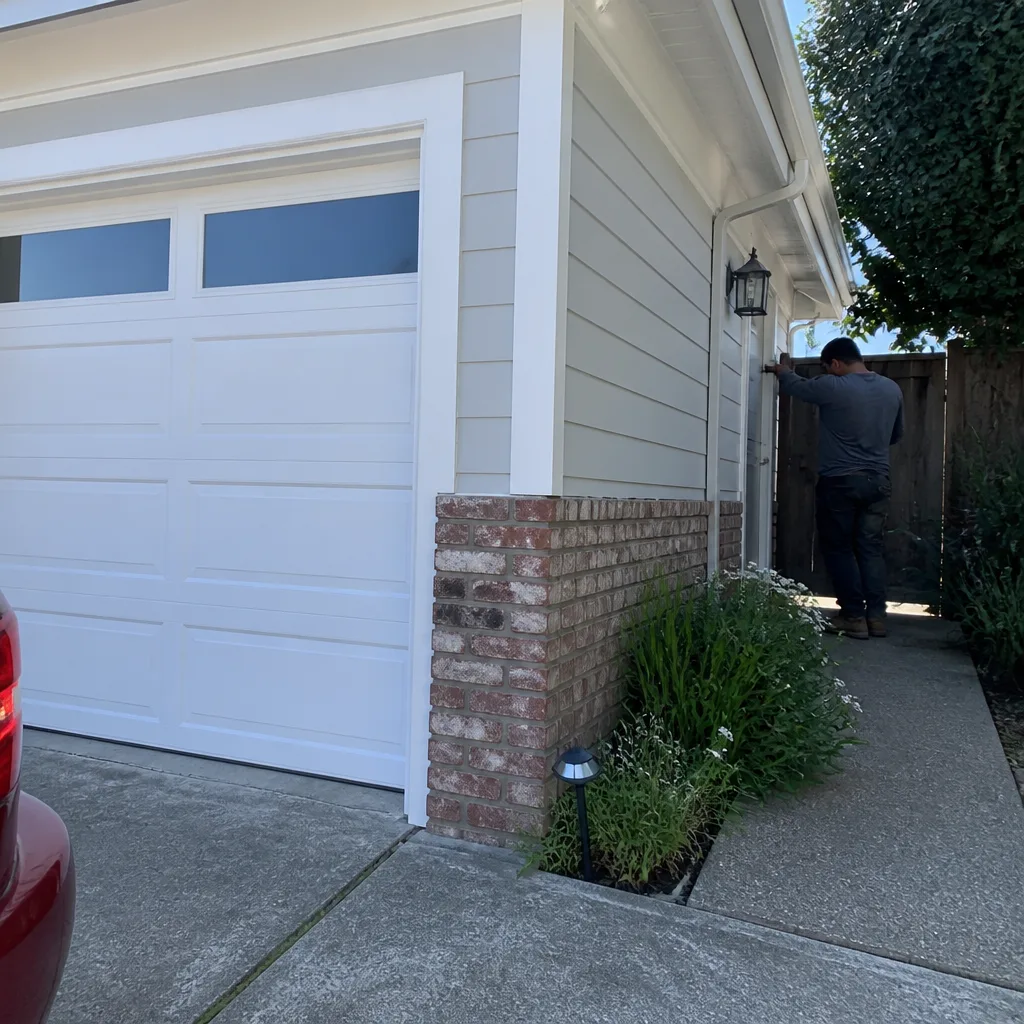 After
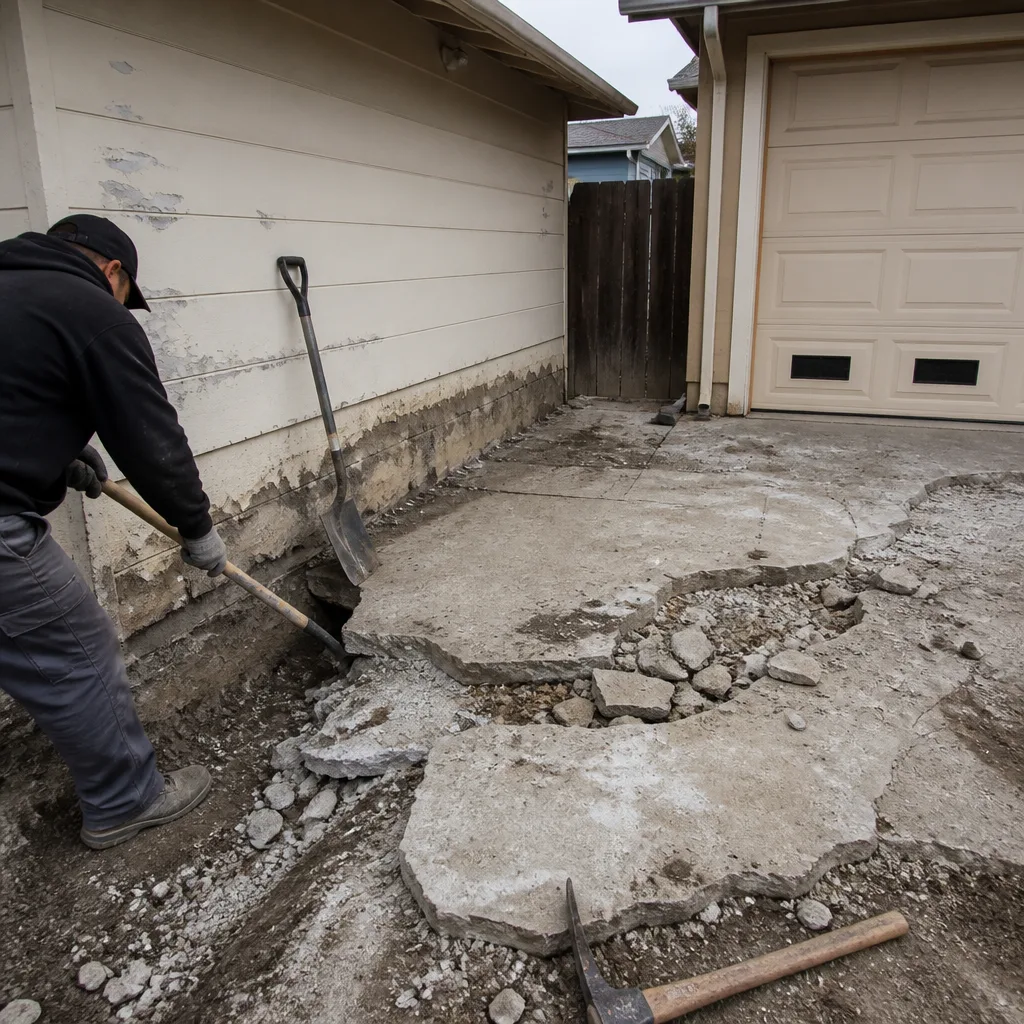 Before
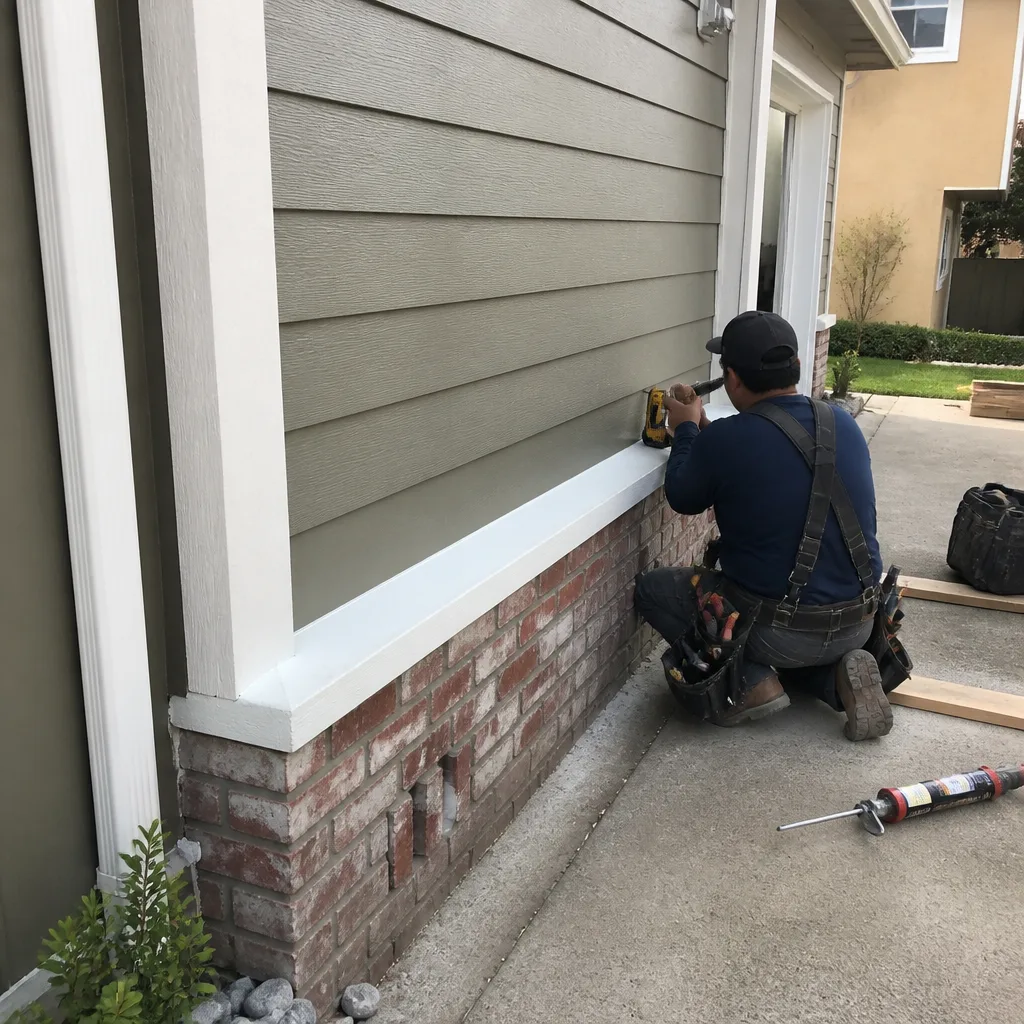 After
 Before
 After
When to Call a Professional
Call a professional when the issue involves structural movement, electrical systems, gas lines, roof access, or any repair where a mistake could cause personal injury or water-sourced damage inside wall cavities. Specific signals include: a retaining wall with new cracks or visible leaning, a circuit breaker that trips repeatedly or feels warm to the touch, water staining on interior ceilings or walls that appeared without a known roof leak, a crawl space with standing water or persistent moisture, and any roof inspection that requires getting on the roof surface itself. San Bruno Construction offers free estimates in San Bruno. Call (866) 472-1908 to schedule a walk-through, and you’ll get a written assessment of what needs attention now and what’s coming due in the next few years.
Frequently Asked Questions
Twice a year, in spring and fall. San Bruno’s daily fog cycle means exterior caulk joints crack faster here than in most Bay Area communities. West-facing windows and any seal exposed to direct afternoon sun after a foggy morning need the most frequent attention.
Defensible space clearing around the structure, roof cleanliness and condition, and attic vent screening are the maintenance items most commonly cited in insurance inspections. Document your work with photos and dates because insurance inspections happen on the insurer’s schedule, and your records are your defense.
It can. Workmanship warranties typically include an expectation of reasonable maintenance, and manufacturer warranties on major systems often require documented annual servicing. Keep a simple maintenance log with date-stamped photos, and you’ll have the records you need if a warranty claim ever becomes necessary.
Gutter cleaning, downspout flushing, exterior caulk inspection and recaulking, defensible space vegetation clearing, visual roof inspection from the ground, and water heater flushing are all homeowner-appropriate tasks. Anything involving roof access, electrical panels, gas appliances, or structural evaluation should go to a licensed professional.
Clogged weep holes and inadequate drainage behind the wall build hydrostatic pressure that slowly overcomes the wall’s structural capacity. Most San Bruno retaining wall failures we see are drainage failures first and structural failures second. Inspect weep holes annually and watch for new cracks or bulging.
Every maintenance inspection that notes a functional-but-aging system adds data to a capital improvement plan. Grouping items by project scope, a window replacement with exterior caulking and trim work, or a roof replacement with attic insulation and vent screening, reduces duplicate labor and material costs compared to tackling each item reactively. If you’re ready to turn maintenance findings into a renovation plan, call (866) 472-1908 to schedule a free estimate.
The Bottom Line
San Bruno maintenance isn’t a generic California checklist. It’s a targeted response to fog, wind, hillside drainage, older housing stock, and a wildfire-adjacent insurance environment. The homeowner who inspects exterior seals twice a year, documents every maintenance task, watches retaining walls and drainage during real rain, and maintains defensible space is playing a defensive game that pays off in lower repair costs, longer system lifespans, valid warranties, and a stronger negotiating position with insurers. The homeowner who skips those tasks is funding a future emergency. Your maintenance log is the raw data for a capital improvement plan that turns reactive repairs into planned renovations, and the checklist in this guide gives you the exact items to track. For help assessing your San Bruno home’s maintenance needs or planning the improvements your log points toward, call (866) 472-1908 and we’ll walk the property with you. Start with the San Bruno Construction home page to see the full scope of what we build and maintain.
Written by the team at San Bruno Construction, serving San Bruno since 2016.